Showing posts with label Prostate Cancer treatment in india. Show all posts

Saturday, 20 May 2017

Prostate Cancer Treatment in Delhi

Prostate Cancer Treatment in Delhi


Prostate Cancer Basics: Symptoms

Many men with prostate cancer have no symptoms related to their cancer. For those that do have symptoms, they could include any of the following:

Urinary problems – weak urine stream, difficulty initiating urination, stopping and starting during urination; urinating frequently, especially at night, pain or burning with urination. These symptoms are also often associated with noncancerous enlargement of the prostate, called benign prostatic hypertrophy or BPH.
Blood – in the urine and semen.
Pain – in the hips, pelvis, spine or upper legs.
Pain or discomfort – during ejaculation.

Prsotate Cancer Treatment in Delhi

Prostate  Cancer Basics: The Prostate

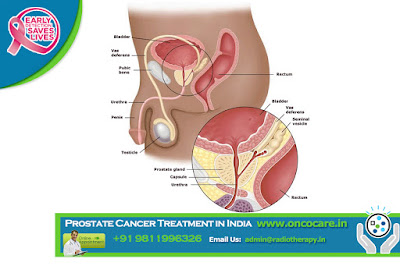
The prostate is a walnut sized gland that is part of the male reproductive system.
The prostate is located beneath the urinary bladder and in front of the rectum.
The prostate makes some of the fluid that nourishes and protects sperm cells in the semen. Just behind the prostate are the seminal vesicles, which make most of the fluid for the semen.
The urethra is a tube that carries urine and semen out of the body through the penis, running through the prostate.
The activity and growth of the prostate is stimulated by male hormones called androgens.
The main androgen is testosterone, produced by the testicles.


Prostate Cancer Basics: Facts

Prostate cancer is the most common malignancy (other than skin cancer) diagnosed in men.
On an annual basis globally, approximately 1.1 Million Men are diagnosed with prostate cancer and more than 300,000 will die of prostate cancer this year.
These statistics show that prostate cancer is a widely variable disease.
Prostate cancer has the potential to grow and spread quickly, but for most men, it is a relatively slow growing disease.
It is important for patients to discuss with their doctors the various aspects of their particular type of prostate cancer to understand how aggressive it is and how best to treat it.
                                                          Prostate Cancer Treatment in delhi
Prostate Cancer Ttreatment

Research shows that men with certain risk factors are more likely to develop prostate cancer. These risk factors include the following:

Age over 65 – this is the main risk factor for prostate cancer. The older a man gets, the more likely he will develop prostate cancer. This disease is rare in men under 45 years of age.
Family History – one’s risk of prostate cancer is higher if you have a father, brother or son with prostate cancer.
Race – prostate cancer is more common among African American men and less common among Asian/Pacific Islanders, Native American and Native Alaskan men.
Certain Prostate Changes – men with cells called high grade prostatic intraepithelial neoplasia (PIN) may be at increased risk for prostate cancer.
Certain Genome Changes – research suggests that the risk for prostate cancer many be linked to specific changes on particular chromosomes.
Having a risk factor does not mean that one will develop prostate cancer. Most men with any of the above risk factors will still never develop this disease.
Prostate Cancer Treatment in Delhi

Friday, 21 April 2017

About Prostate Cancer

Prostate Cancer Treatment in India 


prostate cancer


The prostate gland is part of a man's reproductive and urinary systems. The prostate is oval shaped with a rounded tip. It is approximately 4 cm wide and 3 cm thick. The actual size of the prostate varies from man to man. It can range from the size of a walnut to a small apple.
The prostate surrounds the base (or neck) of the bladder. It has 2 lobes that surround the urethra. The urethra carries urine from the bladder, through the prostate, and out the penis.

Structure

The prostate gland is covered in a layer of connective tissue called the prostatic capsule.
The prostate gland is made up of different types of cells:
  • gland cells that produce the fluid portion of semen
  • muscle cells that control urine flow and ejaculation
  • fibrous cells that provide the supportive structure of the gland
Some structures around the prostate are:
  • seminal vesicles – These glands produce semen and are found on both sides of the prostate.
  • vas deferens – These tubes carry sperm from the testicles to the seminal vesicles.
  • nerve bundles – These nerves control bladder and erectile function and are found on both sides of the prostate.
  • muscles – These muscles control urination.     Best Prostate Cancer Treatment in India

Zones of the prostate

The prostate gland is divided into 3 zones:
  • peripheral
  • transition
  • central

Peripheral zone

The peripheral zone is the area of the prostate that is closest to the rectum. It can easily be felt by the doctor during a digital rectal examination (DRE). It is the largest zone of the prostate gland.
The majority of prostate tumours (approximately 75%) are found in the peripheral zone.

Transition zone

The transition zone is the middle area of the prostate, between the peripheral and central zones. It surrounds the urethra as it passes through the prostate. This zone makes up about 20% of the prostate gland until the age of 40.
As men age, the transition zone begins to enlarge, until it becomes the largest area of the prostate. This is called benign prostatic hyperplasia (BPH). When the transition zone enlarges, it pushes the peripheral zone of the prostate toward the rectum.

Central zone

The central zone is in front of the transition zone. It is the part of the prostate that is farthest from the rectum. Because of this, prostate cancer in this zone cannot be felt by the doctor during a DRE.

Function of prostate

The main function of the prostate is to produce the fluid portion of semen. The gland cells within the prostate produce a thin fluid rich in proteins and minerals that maintain and nourish sperm. This fluid is made continuously. The excess passes from the body in the urine. When a man is sexually aroused, the prostate produces larger amounts of this fluid. It then mixes with sperm and is ejaculated as semen.
The prostate also plays a part in controlling the flow of urine. The urethra runs from the bladder, through the prostate, and out through the penis. The muscle fibres of the prostate are wrapped around the urethra and are under involuntary nervous system control. These fibres contract to slow and stop the flow of urine.

Prostate Cancer Treatment in India

Prostate Cancer Treatment in India

Prostate cancer is a malignant tumour that starts in cells of the prostate. Malignant means that it can spread, or metastasize, to other parts of the body. Prostate cancer is the most common cancer in men. It usually grows slowly and can often be completely removed or managed successfully.
top Prostate cancer treatment in india
The prostate is part of a man’s reproductive system. It is a walnut-sized gland just below the bladder and in front of the rectum. It surrounds part of the urethra, which is the tube that carries urine and semen through the penis. The prostate makes part a liquid called seminal fluid, which mixes with sperm from the testicles to make semen. Semen is released from the penis during orgasm.
Cells in the Prostate Cancer sometimes change and no longer grow or behave normally. These changes may lead to non-cancerous, or benign, conditions such as prostatitis and benign prostatic hyperplasia (BPH).
Changes to cells of the prostate can also cause precancerous conditions. This means that the cells are not yet cancer but there is a higher chance these abnormal changes will become Prostate Cancer. Precancerous conditions that can develop in the prostate are prostatic intraepithelial neoplasia (PIN), proliferative inflammatory atrophy (PIA) and atypical small acinar proliferation (ASAP).
In some cases, changes to prostate cells can cause prostate cancer. Most often, prostate cancer starts in glandular cells of the prostate. These cells make a part of the seminal fluid. This type of cancer is called adenocarcinoma of the prostate.
Call us for Appointment +91 9811996326 

Visit: www.oncocare.in


Friday, 14 April 2017

Prostate Cancer Treatment in India

Prostate Cancer Treatment in India

Prostate Cancer Treatment

Prostate Cancer Treatment in India
Medical management and treatment of Prostate Cancer 
You and your doctor may decide to treat your Prostate Cancer Treatment in India with surgery, radiation therapy, hormone therapy, or a combination. As part of your treatment in the oncocare.in, patients have their cases reviewed weekly by nationally recognized experts in Radiation oncology -- medical oncologists, radiation oncologists  -- who are supported by a specially trained nursing and physician-assistant staff with specific expertise in Radiation Oncology. Together, this team recommends personalized, patient specific Prostate cancer Treatment in India.

There are many variables that are taken into consideration when your Prostate Cancer treatment plan is devised and discussed in the weekly conference such as other health risks, the level of your disease and past health history. Main treatment options may include one or more of the following:

Radical prostatectomy (surgery)
Radiation therapy with the intent to cure
Treatment plans can include intensity modulated radiation therapy, proton therapy and brachytherapy (seeds) [see the Radiation Oncology website for more information].
Hormone therapy
Chemical or surgical castration to remove the source of hormones fueling the cancer. Though not curative, hormone therapy can keep the cancer at bay for an extended time.
Chemotherapy
Active surveillance with regular medical checkups
Cryotherapy
This procedure freezes the cancerous tissue and is used when other therapies have failed.
Referral to the High Risk Prostate Cancer
Surgery
Surgery for prostate cancer, called a radical prostatectomy, is used with intent to cure and involves removing the entire prostate gland and some of the nearby tissue. There are a number of ways to perform this surgery, including open, laparoscopic and robotic. Your surgeon will discuss the advantages and disadvantages for each of these options. Our team has considerable experience in performing this type of Prostate Cancer Surgery.

Robotic prostatectomy with intent to cure is becoming a sought after surgical option. duplicates the standard surgery to remove the Prostate Gland but with smaller incisions. The goal of this procedure is to excise the Prostate Cancer Treatment in India completely, provide good urinary continence post-operatively and maintain ability to have erections after the Prostate Cancer Surgery in India.

Our robotic surgery is made up of five urologic oncologists and one urologist, all specializing in robotic surgery and performs hundreds of prostatectomies each year.

Robotic surgery uses slender telescope-like instruments placed through small incisions as opposed to a large incision that is typical in an open surgery. The surgeon controls the robot from a console next to the patient where the operating field can be viewed in three dimensions. This type of technology, which acts as an extension of the surgeons hands, allowing for more accurate surgery with better outcomes, less pain, less risk of wound infection, less blood loss, less scarring and faster recovery time.

All prostate surgical techniques carry a risk of urinary incontinence and erectile dysfunction. Your surgeon will explain these risks and help you connect to Dr. Kundan singh Chufal Best Coordinator Oncology, Head Radiation Oncology,Senior Consultant, Batra Cancer Centre where you and your spouse or partner can receive aftercare and support.

Friday, 31 March 2017

what is Prostate Cancer and it's Treatment in India??

Prostate Cancer Treatment in India

Prostate Cancer Treatment

What is Prostate?


The prostate is a small sized gland in men that is a part of the reproductive system. It rests below the bladder and in front of the rectum.

What is Prostate Cancer?


Prostate cancer is also known as Carcinoma of the prostate. It develops in the prostate, a part of a reproductive organ which helps make and store seminal fluid. Because of its location, prostate diseases often affect urination, ejaculation, and sometimes defecation.

Causes/ Risk Factors of Prostate Cancer:

Cancer doctor in India


The exact cause of prostate cancer is unknown; however there are few factors that can increase the risk.
·         Age: The risk of cancer increases as you grow old (above 80).
·         Family history: If a member in your family is diagnosed with prostate cancer you are 2-3 times more likely to get the Prostate cancer.
·         Ethnicity: Prostate cancer is more common in black African men than in white or Asian men.
·         Height and weight: Taller men have higher risk than shorter men. Also overweight can increase the risk
·         Environmental factors, such as cigarette smoking and diet that are high in saturated fat, seem to increase the risk of prostate cancer. Additional substances or toxins in the environment or from industrial sources might also promote the development of prostate cancer, but these have not yet been clearly identified.

Signs and Symptoms

A high time to look for one of the Best Prostate cancer hospital of India when these signs and symptoms occur:
·         Trouble urinating (pain when passing urine)
·         Frequent urination
·         A sense of not completely emptying the bladder
·         Blood in the urine and semen
·         Bone pain
·         All of these symptoms can be caused by a variety of things besides prostate cancer, so experiencing any doesn't necessarily mean you have prostate cancer. However, if the symptoms occur frequently then a doctor of a cancer hospital should be consulted.

Saturday, 18 March 2017

Prostate Cancer Treatment in India

Prostate Cancer Treatment in India

It is not only about Prostate Cancer removal it is also about maintaining the quality of life afterwards. "Maintaining Urinary continence and erectile function" is what we excel in. Best Doctor For Cancer Treatment india is  Dr. Kundan Singh Chufal leads all other Surgeons in India. Best Doctor for Prostate Cancer Treatment in India
the number of Robotic Prostatectomies performed as well as outcomes with respect to Prostate cancer control, erectile
function and urinary continence. With Many satisfied patients,
WHEN IT COMES TO PROSTATE CANCER, EXPERIENCE COUNTS!
In addition, patients experience a
quicker return to normal activity, earlier return to sexual activity and excellent urinary control, which is why we are
We Provide Best Treatment for Prostate Cancer Treatment in India. Prostate surgery for prostate cancer Treatment in India and contact us for even more information."

Doctor for Prostate Cancer in Delhi


Radiation is one of the most common forms of Prostate cancer treatment in India. It may be given alone, or in addition to chemotherapy and surgery. There are several different radiation therapies available, and each works to destroy or damage cancerous tissue with high-energy waves or particles such as protons, x-rays, gamma beams or electron beams. Prostate Cancer Treatment India.
Prostate cancer Treatment in India treated with radiation therapy. It is also called radiotherapy. It works by sending radiation to the Prostate cancer This can kill cancer cells or stop them from growing. 
There are 2 types radiation therapy for Prostate Cancer Treatment in India.
Cancer Treatment in Delhi, india

·         External-beam radiation therapy (EBRT). This type of therapy uses a machine similar to an X-ray machine to deliver radiation to your prostate cancer.
·         Internal radiation or brachytherapy. This type of Radiation therapy uses tiny radioactive seeds or tubes put into your body to send radiation to your Prostate Cancer Treatment.
  Call Us : +91 9811996326

               Email:  admin@radiotherapy.in         

Visit: oncocare.in