Showing posts with label Breast Cancer Treatment. Show all posts

Wednesday, 19 April 2017

Breast Cancer Treatment in India
Breast Cancer Treatment  in India


 Breast Cancer treatment in india


Breast Cancer Treatment in India, oncocare.in, tracking symptoms of Breast Cancer and requesting copies of all your results and information. Your immersion into breast cancer vocabulary, medical appointments and procedures will feel overwhelming. Keeping a journal will ensure you maintain a sense of control throughout your journey.  
 breast cancer Treatment  in India

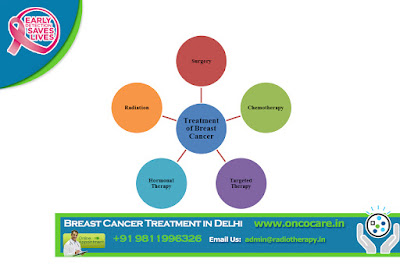
A woman’s most positive course of Breast Cancer treatment will be determined using a number of factors including the size/location of the breast tumor, the stage of the cancer, and laboratory results. Tests that measure Estrogen Receptor (ER) and Progesterone Receptor (PR) are important because the results could be prognostic. These tests can show the potential aggressiveness of the cancer and predict response to treatment. Obtaining a second opinion before beginning breast cancer treatment is recommended. Patients should learn about all treatment options available to them and are encouraged to discuss all possible alternatives with their physician or cancer treatment team. In most cases, women with breast cancer will undergo surgery as part of their cancer treatment. The most common types of breast surgery include: lumpectomy and mastectomy. In addition to a lumpectomy or a mastectomy, some patients will receive adjuvant (additional) treatment to stop cancer growth, spread, or recurrence. Types of adjuvant therapies include: chemotherapy, radiation therapy, and drug treatments. Some women may be treated with chemotherapy, radiation, or drugs without having breast surgery.

Screening Test For Breast Cancer  and treatment norms are continually changing. To help clarify your choices, here are 5 questions to ask your doctor:

What are all of my options for testing or treatment for my condition?
How exactly might the treatment help me?
How good is the evidence I’ll benefit from the treatment?
What side effects can I expect, and what bad outcomes might happen?
If it’s a test, what do you expect to learn from it, and how might it change my treatment? If it won’t, why do I need it?
* Recommended by the Lown Institute

Lumpectomy

Lumpectomy refers to the surgical removal of a tumor in the breast along with a small section of the surrounding normal breast tissue. This tissue is then tested for cancerous cells. Lymph nodes may also be removed for testing. If cancerous cells are discovered, additional surgery or treatment may be necessary. Women who undergo a lumpectomy normally receive radiation therapy for about six weeks following the procedure to kill any cancer cells that may have been missed with the removal of the tumor.

Mastectomy

Mastectomy is the surgical removal of the breast. Types of mastectomy include simple, modified radical, and radical. The removal of some or all of the lymph nodes may or may not occur during the mastectomy. In most case reconstruction is possible almost immediately after the surgery. Mastectomy is usually the treatment for women with Stage 0, Stage I, Stage II, or Stage III breast cancers. Surgeons sometimes perform radical mastectomy on Stage IV patients to provide symptom relief.

Auxiliary node dissection is the removal of some or all of the lymph nodes in the underarm. Auxiliary node dissections are usually done on women having a mastectomy to determine if the cancer has spread past the breast. Sentinel node biopsy is when only the sentinel lymph node is removed to estimate breast cancer metastasis (spread). Lymphedema (chronic swelling of the arm) is a potentially dangerous side effect of lymph node removal.

Sentinel lymph node biopsy followed by Breast Cancer Surgery

The sentinel lymph node is the first lymph node to receive lymphatic drainage from a tumor. It is usually the first place that breast cancer will spread to. To identify the sentinel node, an injection of radioactive material or blue dye is given near the tumor. The sentinel node will be the first lymph node to receive the substance or dye. It is then removed and analyzed.  If cancer cells are not found, the surgeon will proceed with the removal of the tumor.

Chemotherapy

Chemotherapy is an anticancer drug therapy and is normally given intravenously (through the vein) or orally in pill or liquid form. Chemotherapy may be used on its own or with a lumpectomy or mastectomy. Chemotherapy is a systemic form of treatment; it flows through the bloodstream, affecting the entire body. Its purpose is to obstruct the DNA synthesis of cancer cells. The appropriate combination of drugs used for chemotherapy is based on the patient's cancer type and individual medical profile.

Radiation

Radiation therapy uses high-energy rays to prevent breast cancer cells from growing and dividing. Ionizing radiation leaves energy in the area being treated. This process injures cancer cells by damaging genetic material and stops growth. Even though radiation damages both cancer cells and normal cells, the normal cells are usually able to repair themselves after radiation.

Drug Therapy

A variety of drugs may be used with or without breast surgery to treat breast cancer. The most common breast cancer drug is tamoxifen. It interfers with the estrogen receptors in breast cancer cells. By blocking estrogen in the breast, tamoxifen helps reduce the growth and reproduction of breast cancer cells.Other drugs may be used with or without breast surgery to treat breast cancer. They include:

Herceptin: used to treat breast cancer patients who are Human Epidermal growth factor Receptor 2-positive (HER2 )
Ellence: used in conjunction with chemotherapy (cyclophosphamide and fluorouracil) to treat early stage breast cancer
Taxol: used to treat early and advanced stages of breast cancer
Docetaxel: used in conjunction with chemotherapy to treat advanced breast cancer
Aromasin: used in post-menopausal breast cancer patients with advanced breast cancer
Arimidex: used in advanced (metastatic) breast cancer patients who have not responded well to tamoxifen


Saturday, 8 April 2017

Breast Cancer Surgeon In India

Breast Cancer Surgeon In India

Breast cancer is one of the most common cancers among women around the world. The chances of a women being diagnosed with the disease some time during her lifetime is 1 in 8. Therefore it is important for women to be breast cancer Treatment in India and should get her checked on a regular basis.  “Women who undergo breast cancer screening cut their risk of dying from the disease by 40%, according to a global panel of experts,” The Guardian reports.
Breast Cancer Treatment


Breast cancer is a cancer that usually develops in the inner lining of the milk ducts or the lobules. The cancer that starts from the lobules is known as lobular carcinoma and the cancer that starts from the ducts is called ductal carcinoma. Everyone’s breast looks and feels different in make-up. There is no right or wrong way of checking it. But you can keep a note on the following points:

  • A change in size or shape of one or both the breast
  • Redness or rash around the skin or nipple
  • Discharge from one or both the nipples
  • Lump in several parts of the breast
  • Constant pain in the breast
  • If one or both the nipples change in shape (inverted)

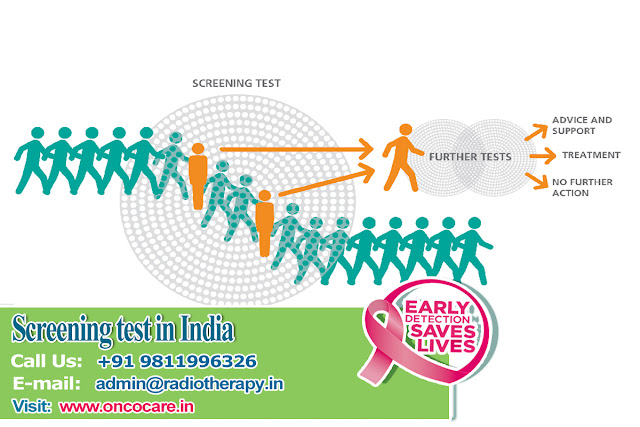
Another way to find out about breast cancer is through screening tests. Breast screening tests in India helps to find the cancer before a person develops symptoms. This can help locate cancer at an early stage. When cancer is found early, it is easier to treat the disease and the chances of complete recovery increases.
cancer Treartment india 
Three of the common tests used for screening are: Mammogram, CBE (Clinical breast exam) and MRI (magnetic resonance imaging). Mammography is one of the most common screening tests available. This test detects tumors that are too small to feel. Finding out about breast cancer in the early stage can reduce the risk of dying from the disease by 25-30%. It is recommended that women should begin having mammogram tests yearly at age 40. According to the American Cancer Society, about 10% of women who had a mammogram might require more tests if they have dense breast or are under the age of 40. This is because the mammogram test might not give proper results.
    Before going for any screening tests, Breast Cancer Doctor in India should be consulted. Small changes in your lifestyle can have big effects on your life. And you can achieve this by keeping yourself aware about various health issues.
Call Us: +91 9811996326 

Monday, 27 February 2017

Breast Cancer Treatment in India


Breast Cancer Treatment in India


Breast Cancer Treatment in India
Road from Detection to Breast Cancer Treatment in India

Breast Cancer Treatment in The World
1. 1.15 million new cases
2. Incidence increasing in most countries
3. 4,70, 000 deaths annually
4. Half of the global burden in low- and medium-resourced countries

Mortality Trends
 Mortality  Treands


Trends since 1950 in age-standardized death rates comparing breast and selected other types of cancer, among women

EBCTCG, Lancet, 2010


Breast Cancer


1. How can we increase the survival rates in Breast Cancer in India?

2. Does screening have a role to play?

3. Early Detection/Diagnosis and Optimal Treatment is the only way to increase the survival rates.

4. Yes, screening has a big role to play in this goal


  Screening


What is Screening?

1. Screening is the application of a test to an asymptomatic population to determine who is likely to have the disease and who is not likely to have disease.


What Do We Gain From Screening???

1. Cancer screening ? secondary prevention - earlier therapeutic intervention is possible through screening an asymptomatic population to identify cancer at an earlier stage than it would have been in the absence of screening.

  Components Of Breast Screening?  

1. Clinical breast examination
2. Screening Mammography
3. Screening breast MRI (in selected cases)

Mammography In India


Best Breast Cancer Surgeon in India
 
                          
Breast Specialist Doctor in India

Mammography Equipment


Mammography


1. Use a low-dose x-ray system to examine breasts
2. Digital mammography replaces x-ray film by solid-state detectors that convert x-rays into electrical signals. These signals are used to produce images that can be displayed on a computer screen (similar to digital cameras)
3. Mammography can show changes in the breast up to two years before a physician can feel them

SCREENING MAMMOGRAPHY

4. Screening mammography refers to routine mammographic images in asymptomatic women has resulted in shift in both incidence and stage of patients presenting with breast cancer
5. Overall sensitivity: 75% (>90% in fatty breasts)
6. It is inexpensive and widely available
7. Mammography is the only screening test which has been shown to reduce deaths due to breast cancer
8. 20-40% mortality reduction for women in the screened groups vs. control groups
9. Consists of two views of each breast
a. craniocaudal
b. mediolateral oblique
10. The BIRADS (Breast Imaging Reporting and Data Systems) classification system has been widely adopted as classifying mammograms with respect to appropriate follow up and intervention


Views Seen on Mammogram

RCC LCC RMLO LMLO

What Does A Mammograms Show?

a. Two of the most important mammographic indicators of breast cancers
b. Masses
c. Microcalcifications:  Tiny flecks of calcium – like grains of salt – in the soft tissue of the breast that can sometimes indicate an early cancer.


 Detection of Malignant Masses

1. Malignant masses have a more speculated appearance


Maligent Begins
Ultrasound Screening

1. Use as screening tool remains controversial
a. Low specificity, higher cost, lack of availability
b. Low sensitivity for calcifications of DCIS
c. Diagnostic test for evaluation of mammographic and palpable abnormalities
d. Can differentiate cystic from solid
e. Characterize solid masses
f. Evaluate the axilla for metastatic disease
g. First exam for patients less than age 30


Breast MRI Screening
Breast MRI is more sensitive than mammography in detecting breast cancer, however it is less specific and results in high false positive rates
Therefore, careful patient selection for additional MRI screening is required
NCCN has recommended Screening MRI in women at high risk of breast cancer:
# Women with a pedigree s/o or with a known genetic predisposition (BRCA1/2) mutation carrier or HBOC, starting at 25 years or individualized based on earliest age of onset in family
# Women who received thoracic irradiation b/w 10-30 years

Appearance of Lesson on MRI


Screening Guidelines


Take Home Message


1. Early Diagnosis and Treatment forms the basis of better and improved survival
2. Breast screening has a very important role in achieving this goal.
3. Clinical Breast Examination and Mammography are the most effective screening tools.
4. All the suspicious lesions or findings in screening should be investigated thoroughly.