Showing posts with label Breast Cancer Treatment in India. Show all posts

Thursday, 11 May 2017

Breast Cancer Treatment in India

Breast Cancer Treatment in India

General Information About Breast Cancer


Key Points about Breast cancer

  • Breast cancer is a disease in which malignant (cancer) cells form in the tissues of the breast.
  • A family history of breast cancer and other factors increase the risk of breast cancer.
  • Breast cancer is sometimes caused by inherited gene mutations (changes).
  • The use of certain medicines and other factors decrease the risk of breast cancer.
  • Signs of breast cancer include a lump or change in the breast.
  • Tests that examine the breasts are used to detect (find) and diagnose breast cancer.
  • If cancer is found, tests are done to study the cancer cells.
  • Certain factors affect prognosis (chance of recovery) and treatment options.

Breast cancer is a disease in which malignant (cancer) cells form in the tissues of the breast.

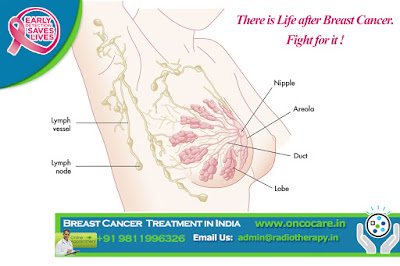
The breast is made up of lobes and ducts. Each breast has 15 to 20 sections called lobes. Each lobe has many smaller sections called lobules. Lobules end in dozens of tiny bulbs that can make milk. The lobes, lobules, and bulbs are linked by thin tubes called ducts.
Top Breast Cancer Treatment in India

Anatomy of the female breast. The nipple and areola are shown on the outside of the breast. The lymph nodes, lobes, lobules, ducts, and other parts of the inside of the breast are also shown.
Breast Cancer Treatment in India

Each breast also has blood vessels and lymph vessels. The lymph vessels carry an almost colorless fluid called lymph. Lymph vessels carry lymph between lymph nodes. Lymph nodes are small bean-shaped structures that are found throughout the body. They filter substances in lymph and help fight infection and disease. Clusters of lymph nodes are found near the breast in the axilla (under the arm), above the collarbone, and in the chest.
The most common type of breast cancer is ductal carcinoma, which begins in the cells of the ducts. Cancer that begins in the lobes or lobules is called lobular carcinoma and is more often found in both breasts than are other types of breast cancer. Inflammatory breast cancer is an uncommon type of breast cancer in which the breast is warm, red, and swollen.
following PDQ summaries for more information about breast cancer:

Saturday, 6 May 2017

Starting Sign of Breast Cancer

Starting Sign of  Breast Cancer

Breast Cancer Treatment in India

Starting Stage of Breast Cancer - thought of breast cancer can send shivers down your spine. It is a rather common form of Breast Cancer, which can lead to many complications and adverse effects. Moreover, it can affect women at any age, and sometimes it can affect teens. But don’t panic! Read our post here to learn some little-known facts, causes, and symptoms of breast cancer!
 Breast Cancer Treatment in India.

What Is Breast Cancer and 
Breast Cancer Treatment in India.?
The human body constitutes of tiny cells that regenerate on its own. The body automatically creates the healthy new cells after the death of the older ones. It also includes the cells in the breasts. But when the cell transforms into a harmful form, which eventually divides and multiplies at a rapid pace it gives rise to a painful tumor. A mass or lump of abnormal body cells forms within the breast, and it gives rise to breast cancer.

Breast cancer is a typical form of malignant tumor that develops in your teen’s breast. The cancerous cells can even spread to the other breast and felt a lump. In rare cases, breast cancer spreads to other parts of your teen’s body which include the bones, the liver, or elsewhere

In its early stages,breast cancer usually has no symptoms. As a tumor develops, you may note the following signs:        
           A lump in the breast or underarm that persists after your menstrual cycle. This is often the first apparent symptom of breast cancer. Lumps associated with breast cancer are usually painless, although some may cause a prickly sensation. Lumps are usually visible on a mammogram long before they can be seen or felt.
           Swelling in the armpit.
           Pain or tenderness in the breast. Although lumps are usually painless, pain or tenderness can be a sign of breast cancer. oncocare.in is Best Hospital for Breast Cancer Treatment in India.

            A notice able flattening or indentation on the breast, which may indicate a tumor that cannot be seen or felt.
           Any change in the size, contour, texture, or temperature of the breast. A reddish,pitted surface like the skin of an orange could be a sign of advanced breast cancer.
           A change in the nipple, such as a nipple retraction, dimpling, itching, a burning sensation, or ulceration. A scaly rash of the nipple is symptomatic of Paget's disease, which may be associated with an underlying breast cancer. 
Breast Cancer Treatment in India
           Unusual discharge from the nipple that may be clear, bloody, or another color. It's usually caused by benign conditions but could be due to cancer in some cases.
           A marble-like area under the skin.
           An area that is distinctly different from any other area on either breast.
In Breast Cancer treatment in India patients see improvement from the first day. Although the rate of improvement differs from patient to patient but they experience health improvements without any side effects. Best Breast CancerTreatment in India.

Monday, 1 May 2017

Breast Cancer Treatment in India

Breast Cancer Treatment in India


Breast Cancer


Radiation therapy is the use of high-energy x-rays or other particles to kill Breast Cancer cells. A doctor who specializes in giving radiation therapy to treat cancer is called a Radiation Oncologist in India. The most common type of radiation treatment is called external-beam radiation therapy, which is radiation given from a machine outside the body. When radiation treatment is given using a probe in the operating room, it is called intraoperative radiation. When radiation is given by placing radioactive sources into the tumor, it is called brachytherapy. Although the research results are encouraging, intra-operative radiation and brachytherapy are not widely used, and treatment is typically reserved for a small cancer with no evidence that it has spread to the lymph nodes.
radiation therapy regimen usually consists of a specific number of treatments given over a set period of time. Most commonly, radiation therapy is given after a lumpectomy, and following adjuvant chemotherapy if recommended. Radiation therapy is usually given daily for a set number of weeks to get rid of any remaining cancer cells near the tumor site or elsewhere in the breast. This helps lower the risk of recurrence in the breast. In fact, with modern surgery and radiation therapy, recurrence rates in the breast are now less than 5% in the 10 years after treatment, and survival is the same with lumpectomy or mastectomy.
Adjuvant radiation therapy may also recommended for some women after a mastectomy, depending on the age of the patient, the size of their tumor, the number of lymph nodes under the arm that contain cancer, the width of healthy tissue around the tumor removed by the surgeon, the ER, PR, and HER2 status, and other factors.
Neoadjuvant radiation therapy is radiation therapy given before surgery to shrink a large tumor, which makes it easier to remove. 
Radiation therapy can cause side effects, including fatigue, swelling of the breast, redness and/or skin discoloration/hyperpigmentation and pain/burning in the skin where the radiation was directed, sometimes with blistering or peeling. Very rarely, a small amount of the lung can be affected by the radiation, causing pneumonitis, a radiation-related swelling of the lung tissue. This risk depends on the size of the area that received radiation therapy, and this tends to heal with time. In the past, with older equipment and radiation therapy techniques, women who received Best Breast Cancer treatment in India on the left side of the body had a small increase in the long-term risk of heart disease. Modern techniques are now able to spare most of the heart from the effects of radiation.
Call Us For Appointment Best Oncologist in India +91 9811996326 

Tuesday, 25 April 2017

Breast Cancer Treatment in india

Breast Cancer Treatment in India


 breast Cancer treatment in india


If you have breast cancer, your healthcare team will create a Breast Cancer Treatment in India plan just for you. It will be based on your health and specific information about the Breast Cancer. When deciding which treatments to offer for ductal carcinoma and lobular carcinoma, your healthcare team will consider:
  • the stage
  • if you have reached menopause
  • the hormone receptor status of the cancer
  • the HER2 status of the cancer
  • the risk that the cancer will come back, or recur (for early stage breast cancers)
  • your overall health
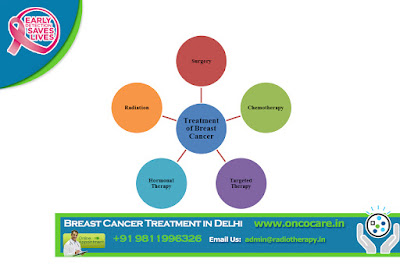
You may be offered one or more of the following treatments for breast cancer.

Breast Cancer Surgery in India

Most women with breast cancer will have surgery. Your healthcare team will talk to you about the different types of surgery to help you decide which is best for you. The types of surgery you will be offered depend mainly on:
  • the size and location of the tumour
  • the size of the breast
  • if the cancer has spread to the lymph nodes
  • if you have already had any treatments for breast cancer
Surgery for breast cancer includes breast-conserving surgery, mastectomy and lymph node surgeries.

Radiation therapy in India

External beam radiation therapy uses a machine to direct radiation through the skin to the tumour and tissue around it.
Radiation therapy is almost always given after breast-conserving Breast Cancer Surgery. In some cases it may be given after a mastectomy. It is also used to treat breast cancer that has spread to the bones, lungs or brain.

Hormonal therapy

Hormonal therapy is often used to treat hormone receptor–positive breast cancer. Post-menopausal women are given different hormonal therapy drugs than premenopausal women.

Chemotherapy

Chemotherapy is a common treatment for breast cancer. It is often given after surgery for early stage breast cancer to reduce the risk that the cancer will come back. It is also the main treatment for advanced or metastatic breast cancer.
Combinations of chemotherapy drugs are most often used for breast cancer because they are more effective than single drugs.

Targeted therapy

Targeted therapy may be given alone or in combination with chemotherapy, hormonal therapy or both.

Call us for Appointment : +91 9811996326 

Thursday, 20 April 2017

Risk Factor of Breast Cancer

Cause of Breast Cancer


The exact cause of breast cancer — that is, what causes breast cells to start to grow out of control — is not known. The combination of a person's genes and their environment likely plays a role in the development of the disease.
In about 5 to 10 percent of Breast Cancer cases, genetic mutations are linked to the disease. For example, women with mutations in the BRCA genes are at increased risk for breast cancer. Some studies show that women with mutations in the BRCA1 gene have a 50 percent to 70 percent chance of getting breast cancer by age 70, and women with mutations in the BRCA2 gene have a 40 percent to 60 percent chance, a nonprofit organization that funds breast-cancer research and advocates for patients.
Breast Cancer Surgeon in India
Risk Factors of Breast Cancer
 1. family history of breast cancer,
 2. starting menstrual periods before age 12 or going through menopause after age 55,
 3. not having children, 
4. having dense breast tissue, 
5. using hormone therapy after menopause,
 However, most women who get Breast cancer don't have any risk factors for the disease, other than their gender and age, the ACS says.
Call us for Appointment : +91 9811996326 
E-mail: admin@radiotherapy.in

Wednesday, 19 April 2017

Breast Cancer Treatment in India

Breast Cancer Treatment  in India


 Breast Cancer treatment in india


Breast Cancer Treatment in India, oncocare.in, tracking symptoms of Breast Cancer and requesting copies of all your results and information. Your immersion into breast cancer vocabulary, medical appointments and procedures will feel overwhelming. Keeping a journal will ensure you maintain a sense of control throughout your journey.  
 breast cancer Treatment  in India

A woman’s most positive course of Breast Cancer treatment will be determined using a number of factors including the size/location of the breast tumor, the stage of the cancer, and laboratory results. Tests that measure Estrogen Receptor (ER) and Progesterone Receptor (PR) are important because the results could be prognostic. These tests can show the potential aggressiveness of the cancer and predict response to treatment. Obtaining a second opinion before beginning breast cancer treatment is recommended. Patients should learn about all treatment options available to them and are encouraged to discuss all possible alternatives with their physician or cancer treatment team. In most cases, women with breast cancer will undergo surgery as part of their cancer treatment. The most common types of breast surgery include: lumpectomy and mastectomy. In addition to a lumpectomy or a mastectomy, some patients will receive adjuvant (additional) treatment to stop cancer growth, spread, or recurrence. Types of adjuvant therapies include: chemotherapy, radiation therapy, and drug treatments. Some women may be treated with chemotherapy, radiation, or drugs without having breast surgery.

Screening Test For Breast Cancer  and treatment norms are continually changing. To help clarify your choices, here are 5 questions to ask your doctor:

What are all of my options for testing or treatment for my condition?
How exactly might the treatment help me?
How good is the evidence I’ll benefit from the treatment?
What side effects can I expect, and what bad outcomes might happen?
If it’s a test, what do you expect to learn from it, and how might it change my treatment? If it won’t, why do I need it?
* Recommended by the Lown Institute

Lumpectomy

Lumpectomy refers to the surgical removal of a tumor in the breast along with a small section of the surrounding normal breast tissue. This tissue is then tested for cancerous cells. Lymph nodes may also be removed for testing. If cancerous cells are discovered, additional surgery or treatment may be necessary. Women who undergo a lumpectomy normally receive radiation therapy for about six weeks following the procedure to kill any cancer cells that may have been missed with the removal of the tumor.

Mastectomy

Mastectomy is the surgical removal of the breast. Types of mastectomy include simple, modified radical, and radical. The removal of some or all of the lymph nodes may or may not occur during the mastectomy. In most case reconstruction is possible almost immediately after the surgery. Mastectomy is usually the treatment for women with Stage 0, Stage I, Stage II, or Stage III breast cancers. Surgeons sometimes perform radical mastectomy on Stage IV patients to provide symptom relief.

Auxiliary node dissection is the removal of some or all of the lymph nodes in the underarm. Auxiliary node dissections are usually done on women having a mastectomy to determine if the cancer has spread past the breast. Sentinel node biopsy is when only the sentinel lymph node is removed to estimate breast cancer metastasis (spread). Lymphedema (chronic swelling of the arm) is a potentially dangerous side effect of lymph node removal.

Sentinel lymph node biopsy followed by Breast Cancer Surgery

The sentinel lymph node is the first lymph node to receive lymphatic drainage from a tumor. It is usually the first place that breast cancer will spread to. To identify the sentinel node, an injection of radioactive material or blue dye is given near the tumor. The sentinel node will be the first lymph node to receive the substance or dye. It is then removed and analyzed.  If cancer cells are not found, the surgeon will proceed with the removal of the tumor.

Chemotherapy

Chemotherapy is an anticancer drug therapy and is normally given intravenously (through the vein) or orally in pill or liquid form. Chemotherapy may be used on its own or with a lumpectomy or mastectomy. Chemotherapy is a systemic form of treatment; it flows through the bloodstream, affecting the entire body. Its purpose is to obstruct the DNA synthesis of cancer cells. The appropriate combination of drugs used for chemotherapy is based on the patient's cancer type and individual medical profile.

Radiation

Radiation therapy uses high-energy rays to prevent breast cancer cells from growing and dividing. Ionizing radiation leaves energy in the area being treated. This process injures cancer cells by damaging genetic material and stops growth. Even though radiation damages both cancer cells and normal cells, the normal cells are usually able to repair themselves after radiation.

Drug Therapy

A variety of drugs may be used with or without breast surgery to treat breast cancer. The most common breast cancer drug is tamoxifen. It interfers with the estrogen receptors in breast cancer cells. By blocking estrogen in the breast, tamoxifen helps reduce the growth and reproduction of breast cancer cells.Other drugs may be used with or without breast surgery to treat breast cancer. They include:

Herceptin: used to treat breast cancer patients who are Human Epidermal growth factor Receptor 2-positive (HER2 )
Ellence: used in conjunction with chemotherapy (cyclophosphamide and fluorouracil) to treat early stage breast cancer
Taxol: used to treat early and advanced stages of breast cancer
Docetaxel: used in conjunction with chemotherapy to treat advanced breast cancer
Aromasin: used in post-menopausal breast cancer patients with advanced breast cancer
Arimidex: used in advanced (metastatic) breast cancer patients who have not responded well to tamoxifen


Thursday, 13 April 2017

Breast Cancer Surgery in India

Breast Cancer Surgery in India


Minimally invasive breast surgery (MIBS) encompasses a range of surgical and non-surgical steps taken to improve the physical, emotional, and quality of life impact for women with breast cancer. MIBS is more that simply the act of performing operations through small incisions. The more important goals of MIBS are to improve the outcome of breast cancer treatment by:

Preserving or even improving breast appearance
Minimizing short and long-term side effects of surgery
Reducing treatment complications
Expediting return to normal daily activities

oncocare.in leading expert in Breast Cancer Treatment in India, Dr. Kundan Singh Chufal provides a complete array of such procedures, including

Hidden scar nipple-sparing mastectomy. This type of mastectomy is a nipple sparing mastectomy procedure performed through a small, 2-3 inch incision hidden in the skin fold under the breast. Combined with immediate breast reconstruction, hidden scar nipple sparing mastectomy results in a completely normal-looking (if not better than normal looking) breast with intact skin, nipple, and areola and no visible scar when the breast is viewed from the front.
Lymph node-sparing surgery. Axillary reverse mapping entails injecting blue dye into the nearby arm, which temporarily turns the arm lymph nodes blue in color to make it easier for Dr. Kundan to see and protect arm lymph nodes during breast cancer surgery.  Protection of arm nodes and lymph vessels preserves the drainage of lymph fluid from the arm, thereby preventing or reducing the risk of lymphedema.
Call us for Appointment: +91 9811996326 

Wednesday, 12 April 2017

Breast Cancer Treatment in India

Breast Cancer Surgeon in India

Breast Cancer Surgeon india


What is radiation therapy?               

Radiation therapy is a treatment for cancer that uses high-energy X-rays. A machine directs the rays of energy to the area of cancer. Radiation therapy is also called radiotherapy. Its goal is to kill or shrink cancer cells from Breast

When might radiation therapy be used for breast cancer?

Radiation Treatment in India is most often used along with other breast cancer treatments in India, like surgery or chemotherapy. Your doctor may advise radiation if either of the below apply to you:

You have an early stage breast cancer. You would get radiation after Breast Cancer Surgery in India. This is called adjuvant treatment. Radiation is often used after breast-conserving surgery. It is sometimes used after mastectomy. The goal is to kill cancer cells that can't be seen, but may have been left behind after Breast Surgery, which lowers the chance the cancer will come back.
You have metastatic breast cancer. This means the cancer has spread. The goal of radiation in this case is mainly to ease symptoms of the Breast Cancer. This is sometimes called palliative treatment.
Types of radiation therapy

The types of therapy include:                                                                                                                    

External radiation. This is called external beam therapy (EBRT). It’s the most common type used to treat Breast Cancer Treatment in India. A treatment that precisely sends high levels of radiation directly to the cancer cells. The machine is controlled by the radiation therapist. Since radiation is used to kill cancer cells and to shrink tumors, special shields may be used to protect the tissue surrounding the treatment area.
Internal radiation. This is called brachytherapy or implant radiation. This type of radiation treatment is given inside the body in the area of the cancer. It gives a higher dose of radiation to a small area for a shorter time. The radiation source may be put directly into the area of the breast tumor. Or it may be put in through a small tube placed near the tumor.
Before radiation therapy

Your radiation oncologist may do some imaging tests before your radiation therapy in India. These may include X-rays and computed tomography (CT) scans. Imaging tests help show exactly where you need treatment. You may have the same tests after treatment to see how well it worked. 

Before you start Breast cancer treatment in India, oncocare.in is Best Breast Cancer Treatment in India, imaging scans will be used to measure the exact location of the tumor so the beams of radiation can be focused there. Usually it's aimed at the whole breast. Sometimes it has to be aimed under your arm and at other parts of your chest, too. Small ink marks may be put on your skin to mark the treatment area. This ensures that the radiation reaches only the tumor, and not healthy parts of your body.

Tuesday, 11 April 2017

Breast Cancer Treatment in India

Breast Cancer Treatment in India

Breast Cancer Surgeon india

Routine care is the best way to keep you and your breasts healthy. Although detecting breast cancer at its earliest stages is the main goal of routine breast care, other benign conditions, such as fibrocystic breasts or cysts, are often discovered during routine care.
Breast cancer is the most common type of cancer among women in the United States, other than skin cancer.

According to the National Cancer Institute, when breast cancer is found early and is still localized (restricted to the site of origin, without evidence of spread), the relative survival rate, when measured at five years, is around 98 percent. When breast cancer is found at a late stage (cancer that has spread to distant parts of the body), the survival rate at five years is about 23 percent.

Although the incidence of breast cancer is beginning to decrease, one out of eight women will develop breast cancer at some point in her life. Mortality rates have decreased over the past several years because of early detection and improved treatment of Breast.

If you are diagnosed with Breast Cancer Treatment in India, the most important thing for you to remember is that it is not a hopeless condition. Early detection and modern therapy with a combination of Breast cancer Surgery in India, Radiation Treatment in India, drugs, or hormones can help many patients.

Monday, 20 March 2017

Breast Cancer Treatment in India

Breast Cancer Treatment in India

Breast cancer Surgery

 Breast Cancer Treatment


What is Breast Cancer?

Breast cancer is a malignant growth that begins in the tissues of the breast. It is one of the most common Breast cancers among women around the world. The chance of a women being diagnosed with the disease some time during her lifetime is 1 in 8. Therefore, it is important for women to be breast aware and her relative about Breast Cancer Treatment in India
1. A change in size or shape of one or both the breast
2. Redness or rash around the skin or nipple
3. Discharge from one or both the nipples
4. Lump in several parts of the breast
5. Constant pain in the breast
6. If one or both the nipples change in shape (inverted)

Risk factors of Breast Cancer:

 Breast Cancer Treatment in India

1. Family history: It increases the risk by two to three folds. Mutations in BRCA1, BRCA2 and p53 results in a very high risk of breast cancer
2. Reproductive factors: Late menopause and late age at first child birth are among the most common risk factors
3. Age: Breast cancer risk increases after a certain age (above 40)
4. Lifestyle related factors: Using oral contraceptives
5. Obesity and heavy drinking

Breast Cancer Sign & Symptoms:

The most common symptom includes

1. A Lump in the breast tissue
2. Redness of the breast
3. Change in the size or shape
4. Change in the nipple along with discharge and sometimes bleeding
5. Swelling in armpit
6. Change in the skin texture (thickening/ rigid)

  Breast cancer Treatment

Awareness of Breast Cancer 

With awareness of Breast cancer, it could be prevented to a great extent. Some of the points to be kept in mind are:

1. Limit alcohol and stop smoking
2. Maintain a healthy weight
3. Breastfeed (if you can)
4. Make exercise a part of your life
5. Include more of cruciferous vegetables & fruits and less of red meat
6. Get yourself checked on a regular basis

Call for Appointment : +91 9811996326

 Email:  admin@radiotherapy.in

Visit:    oncocare.in   &  radiotherapy.in

Saturday, 18 March 2017

Best Breast Cancer Treatment in India,

Best Breast Cancer Treatment in India

About Breast Cancer : 
Breast cancer treatments in India are methods that experts agree are appropriate, accepted, and widely used. These standard procedures have proven useful in fighting  breast cancer.
A breast cancer Treatment in India , on the other hand, is an approved research study that some doctors believe has a strong potential to improve standard treatments of Breast Cancer india. When clinical trials demonstrate better results than the standard, that new Breast Cancer treatment becomes the standard. Remember Here Best Doctor For Breast Cancer Treatment in India.
If a breast cancer clinical trial is an option for you, your doctor will explain the possible trade-offs with the trial treatment versus standard treatment. Together with your medical team, you will need to decide what treatment method is the best for you and your health.


cancer Treatment in Delhi

Your treatment options depend on the stage of your disease and these factors:

The size of the tumor in relation to the size of your breast
The results of specific pathology tests (hormone receptors, HER2 receptors, grade of the cells, proliferation rate of the cells)
Whether you have gone through menopause
Your general health
Your age
Your family history or other risk factors associated with a predisposition for developing 

Doctor for Breast Cancer Treatment in DelhiBreast Cancer Treatment in India or ovarian cancer Treatment in India
Below are brief descriptions of common treatments for each stage. Other treatments may be appropriate for some women. Research studies (clinical trials) can be an option at all stages of breast cancer.
Most women with ductal carcinoma in situ (DCIS), also known as non-invasive breast cancer, have breast Cancer surgery in India, also known as lumpectomy followed by radiation therapy. For some women over the age of 70 who have an early diagnosed breast cancer and the tumor is hormone receptor positive, they may be a candidate to forego radiation therapy.  Though Stage 0 breast cancer Treatment in India is the very earliest that breast cancer can be diagnosed, there are situations in which there is a lot of DCIS within the breast tissue. In some situations, it may be necessary to have a mastectomy performed. Some women also may choose to have a mastectomy. Women with DCIS may receive Tamoxifen to reduce the risk of developing invasive breast cancer in the future.
Women with Stage 1, Stage 2, Stage 3A, or operable Stage 3C breast cancer may have a combination of treatments. (Operable means the cancer can be treated with surgery.)

Some may have breast Cancer Treatment In india followed by radiation therapy to the breast. This choice is common for women with Stage I or II breast cancer Treatment in India. Some may decide to have a mastectomy. With either approach, women (especially those with Stage II or IIIA breast cancer) often have lymph nodes under the arm removed.

Whether or not radiation therapy is used after mastectomy depends on the extent of the Treatment of Breast cancer. If Breast cancer cells are found in 1 to 3 lymph nodes under the arm or if the tumor in the breast is large, the doctor sometimes suggests radiation therapy after mastectomy. If cancer cells are found in more than 3 lymph nodes under the arm and/or the tumor was very close to the chest wall, the doctor usually will suggest radiation therapy after mastectomy.

Call us for Breast Cancer Treatment in India +91 9811996326  

Email: admin@radiotherapy.in

Visit: oncocare.in & radiotherapy.in

Thursday, 22 December 2016

How Cancer Spreads

 Cancer  Treatment

Cancer Treatment In India 

About Cancer Our body is a community of cells, in which each cell occupies a place appropriate for

its tasks on behalf of the whole. With the exception of white blood cells, which patrol the body for microbial invaders and tissue damage, normal cells stay in the tissue of which they are part. Cancer
cells, however, are rogues that trespass aggressively into other tissues. Metastasis, the spread of cancer to distant sites in the body, is in fact what makes cancer so lethal. A surgeon can
remove a primary tumor relatively easily, but a cancer that has metastasized usually reaches so many places that cure by surgery alone becomes impossible. For that reason, metastasis and the invasion
of normal tissue by cancer cells are the hallmarks of malignancy. In countries where health care is primitive, one sometimes sees people who live with tumors as big as a soccer ball; the cells that make up these so-called benign tumors obviously overproliferate, but unlike malignant
cancer cells, they do not invade or metastasize. Acquiring the capabilities needed to emigrate to another tissue is therefore a key event in the development of a cancer. To metastasize successfully, cancer cells have to detach from their original location, invade a blood or lymphatic vessel, travel in the circulation to a distant site and establish a new cellular colony. At every one of these steps, they must escape many controls that, in effect, keep normal cells in place. A fruitful way of understanding how tumor cells evade these controls has consequently been to study the signals that normally direct cells to their place in the body and keep them there during adulthood. 


their “area code” hypothesis, that
a cell has on its surface an address system— written in one set of molecules and readable by molecules on other cells— that identifies where the cell should be. It seemed to me at the time that if a molecular address system existed, something had to be wrong with it in cancer, because cancer cells did not stay put. I decided to try to find such molecules. As the work of many laboratories eventually
showed, area code molecules do exist. They mediate cell adhesion, the anchoring of cells to adjacent structures. In normal tissues, cells adhere both to one another and to an insoluble meshwork  of protein filling the space between them, known as extracellular matrix. (This arrangement is particularly descriptive of the epithelia, which are the cell layers that form the outer surface of the skin and the lining of the gut, lungs and some other organs, and from which most cancer originates.) The two kinds of adhesion play different critical roles during tissue invasion and metastasis. Cell-cell adhesion molecules appear to help keep cells in place; these molecules seem to be missing or compromised in cancer cells. For example, various kinds of cancers lose some or all of an intercellular adhesion molecule called E-cadherin. By manipulating this molecule in
 cultured cancer cells, one can change th cells’ ability to invade tissues and form
tumors. 
 Best Breast Cancer Treatment in India

The Need for Adhesion Adhesion to extracellular matrix, on the other hand, allows cells to survive
and proliferate. As researchers have known for many years, cultured cells cannot reproduce until they attach to a surface, a phenomenon called anchorage dependence. This attachment is mediated by cell-surface molecules known as integrins that bind to the extracellular matrix. As Steven Frisch of the Burnham Institute in La Jolla, Calif., Martin A. Schwartz of the Scripps Research Institute,
also in La Jolla, Calif., and Mina J. Bissell of the University of California at Berkeley have shown, only attachments involving integrins can satisfy the requirements of anchorage dependence.
My laboratory at the Burnham Institute, together with Tony Hunter of the Salk Institute for Biological Studies in San Diego, Calif., has recently shown that unattached cells stop growing because one of the nuclear proteins (known as the cyclin E–CDK2 complex) that regulates the growth and division of cells becomes less active. Inhibitory substances in the nuclei of these cells seem to shut
down this protein. As Frisch, Schwartz and Bissell also discovered, when many types of cells are
denied anchorage, they not only stop proliferating but commit suicide. That is, they spontaneously undergo specific changes that lead to their own death. This kind of cell death, in which the cell
is an active participant, has been termed apoptosis. My group has demonstrated that for cells to survive, the extracellular matrix to which they adhere must bear the right
“area code,” one that is probably found only in the extracellular matrix of select tissues. Moreover, they have to use the appropriate integrin to attach to the ma-trix. As all these results show, a molecula explanation for anchorage dependence is beginning to take shape, although
much more critical detail still needs to be filled in. Cellular suicide from lack of anchorage or from inappropriate anchorage is likely to be one of the safeguards that maintain the integrity of tissues. Cells usually cannot just float away from their tissue and establish themselves somewhere
else, because they will die on the way. Yet cancer cells get around this requirement;
they are anchorage independent. The cyclin E–CDK2 complex in such cells stays active whether the cells are attached or not. How cancer cells accomplish this trick is not fully understood, but it seems that oncogenes can be blamed.
as various experiments have shown, proteins made by these oncogenes convey a false message to the nucleus that the cell is properly attached when it is not, thereby stopping the cell from arresting
its own growth and dying through apoptosis. Anchorage dependence is only one of
the constraints that a cancer cell must overcome to roam around the body. Epithelial cells, the most common sources of cancers, are separated from the rest of the body by a basement membrane,
a thin layer of specialized extracellular matrix. Basement membranes form a barrier that most normal cells cannot breach,
 Breast Cancer Treatment In India

by giving cells in a test tube an opportunity to invade through a natural or reconstructed basement membrane: cancer cells will penetrate it; normal ones will not. Furthermore, in this experiment, cells from metastatic cancers generally invade faster than those from nonmetastatic tumors. White blood
cells, in keeping with their role as security patrol, are an exception to the rule that normal cells do not invade—they, too, are adept at penetrating tissues, including basement membranes. Cancer
cells and white blood cells do so by releasing enzymes, called metalloproteinases,
that dissolve basement membranes and other extracellular matrices. Other cells have less of these enzymes and more enzyme inhibitors. After a cancer cell has passed through the basement membrane separating it from the rest of the tissue at its original site, it soon encounters another basement
membrane, one surrounding a small
lood vessel. 
Fundamental Understandings
MELANOMA
CELL
RGD
MELANOMA METASTASIZES NO METASTASIS
RGD
TRIPEPTIDE
FIBRONECTIN
TUMOR

Spread Cancer


CELL INHIBITING METASTASIS by interfering with cancer cell adhesion may someday be
a therapeutic option. In mouse experiments, injections of RGD, a fragment of the protein
fibronectin, discouraged melanoma cells from spreading to the lungs. Presumably,
the RGD molecules blocked receptors that wandering cancer cells needed for binding
to fibronectin in the extracellular matrix of tissues.tients. Great strides have been made in

CELLULAR ADHESION is a vital brake on the migration of normal cells. Two types
apply to most body cells: cell-cell adhesion and adhesion to the extracellular matrix
(top). If a cell cannot adhere to other cells, it may become more invasive and migrate
through the matrix (middle). If a cell lacks adhesion to the extracellular matrix, it can
detach from its native tissue (bottom). 

 Email Us:  admin@radiotherapy.in
Know More: http://oncocare.in