Showing posts with label Cancer Treatment. Show all posts

Thursday, 11 May 2017

Symptoms of Head & Neck Cancer

Symptoms of   Head & Neck Cancers

head neck cancer treatment india

Head and Neck Cancer Treatment in India

Head & neck cancers can occur inside the mouth (oral cavity), in the salivary glands  in the sinuses
and nasal cavity, in the larynx (voice box), and in the airway leading from behind the nose and
mouth to the top of the esophagus (the pipe through which food travels to the stomach).

Symptoms of Head Neck Cancer Treatment in India vary, depending on the location of thecancer, but they may include:

 A sore in the mouth that bleeds or doesn’t heal

Red or white patches inside the mouth that don’t clear up 
  1. A lump or swelling in the neck, 
  2. A sore throat, or hoarseness that doesn’t go away
  3. Pain in the ears, neck, throat, jaws, or tongue
  4. Nosebleeds, repeated sinus infections, or nasal
  5. congestion that won’t clear up despite treatment
  6. Blood in mucus that is coughed up
  7. Trouble chewing or swallowing
  8. Loose teeth, or dentures that suddenly don’t fit well
  9. Numbness in the head & neck area
  10. Sores or changes in the appearance of moles on your head and neck. Best Head Neck Cancer Treatment in India.
Who’s at Greatest Risk for
Head & Neck Cancer?
  1. •                    People who drink heavily.
  1. People who use tobacco (smoked or chewed). Risk is greatly
  2. multiplied in people who use tobacco and drink heavily.
  3. People treated previously for head & neck cancer.
  4. People infected with the Human Papilloma Virus (HPV), a very
  5. common sexually transmitted disease that often does not
  6. produce symptoms. HPV has been linked to rising numbers of
  7. head & neck cancers. Often the infection is passed on during
  8. oral sex. Head Neck Cancer Treatment in India                

Call Us for Cancer Treatment Appointment: +91 9811996326 

Friday, 28 April 2017

Best Radiation Oncologist in India

Best Radiation Oncologist in India


oncologist in india


Radiation therapy uses high-energy radiation to shrink or eradicate tumor cells. Radiation therapy kills cancer cells by damaging their DNA, and cancer cells whose DNA is damaged beyond repair stop dividing or die.  There are a variety of types of radiation used for cancer treatments. The radiation may come from a machine outside of the body (linear accelerator - LINAC), or it may come from radioactive material placed in the body (brachytherapy).

Patients may receive radiation therapy before, during or after surgery and/or chemotherapy, depending the on the type and site of cancer being treated.

Best Coordinator Oncology Specialist in India

Patients typically receive external-beam radiation therapy in daily treatment sessions over the course of several weeks.  The number of treatment sessions depends on many factors, including the total radiation dose that will de delivered.  Additional items the physician will consider are type and size of the cancer, location in the body, proximity of the tumor to normal tissues that are sensitive to radiation, patient’s general health and medical history and if the patient will have any other type of cancer treatment in india (e.g., Chemotherapy).
oncocare.in has numerous clinical locations, strategically located throughout our network, where patients can receive radiation therapy. Radiation therapy is an important weapon in our battle against cancer. Depending on the type and extent of cancer, radiation therapy can be used alone or in combination with other treatments, such as surgery or chemotherapy.

Radiation therapy effectively treats cancer by using high-energy beams of radiation to pinpoint and destroy cancerous cells. Although radiation therapy is similar to an x-ray, the dose of radiation in cancer treatment is much stronger and is given over a longer period of time.

Various forms of radiation therapy are available; the two basic types are external beam radiation and internal radiation, or brachytherapy.

If your physician determines that radiation therapy should be a part of your treatment plan, and it is not offered within the area where you receive other services, you will be referred to one of our strategic partners for treatment. Your physician will discuss whether radiation therapy is right for you.
Call Us for Appointment : +91 9811996326 
E-mail:  admin@radiotherapy.in  Visit for More Details: www.oncocare.in

Thursday, 27 April 2017

Radiation Oncologist in India

Radiation Oncologist in India


 Radiation Oncologist in India

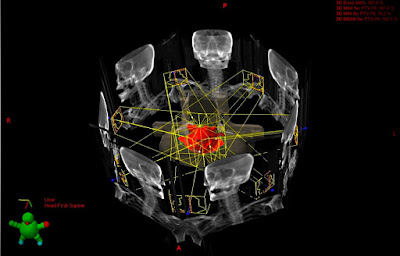
oncocare.in Each patient will meet with the radiation oncologist for a consultation and physical examination to discuss options and benefits of radiation therapy treatments. A comprehensive exam and past family/medical history will help determine correct options for Cancer Treatment in India. If radiation therapy treatment is pursued, patients will then be set up with a simulation appointment. At this appointment, a CT scan will be performed for treatment planning. This is similar to a regular CT scan except that we’ll use an immobilization device (such as a mask, mold, or bean-bag type bag) that will allow us to develop exact positioning throughout your course of radiation therapy. Small tattoos may also be placed on the skin to guide your radiation therapy team to ensure proper setup each day.

Next, the dosimetrist, a member of your Radiation Oncology, will review your information and design a custom treatment plan which will outline the precise location of treatment. The dosimetrist works very closely with the radiation oncologist to deliver your treatment plan in the best way possible.

Before your Radiation Therapy Treatments in India begin, you will come back for one more verification or “dry run” day. This day is very similar to what your treatment will be like but no radiation treatment will be delivered. Your radiation therapists will show you the treatment console area, describe what to expect, and set you up on the treatment table. Films will be taken to ensure proper positioning and drawings may be made for your medical records. 

The Cancer Center at oncocare.in Batra Hospital Delhi Ncr India is equipped with the latest radiation therapy technology and equipment, including the advanced Varian TrueBeam linear accelerator that allows us to target and treat various forms of cancer with pinpoint accuracy.

Image Guided Radiation Therapy (IGRT) and Intensity Modulated Radiation Therapy (IMRT) that delivers high intensity beams of energy directly to a tumor while sparing healthy tissue
Stereotactic Radiosurgery (SRS) that offers fast, precise, non-invasive treatment for tumors located throughout the body including difficult to operate regions such as the lungs, brain and spinal cord
Arc-based treatment that delivers radiation therapy in a fraction of the time of standard radiation oncology equipment 

All of these services are offered on the Oncocare.in.

Thursday, 20 April 2017

Risk Factor of Breast Cancer

Cause of Breast Cancer


The exact cause of breast cancer — that is, what causes breast cells to start to grow out of control — is not known. The combination of a person's genes and their environment likely plays a role in the development of the disease.
In about 5 to 10 percent of Breast Cancer cases, genetic mutations are linked to the disease. For example, women with mutations in the BRCA genes are at increased risk for breast cancer. Some studies show that women with mutations in the BRCA1 gene have a 50 percent to 70 percent chance of getting breast cancer by age 70, and women with mutations in the BRCA2 gene have a 40 percent to 60 percent chance, a nonprofit organization that funds breast-cancer research and advocates for patients.
Breast Cancer Surgeon in India
Risk Factors of Breast Cancer
 1. family history of breast cancer,
 2. starting menstrual periods before age 12 or going through menopause after age 55,
 3. not having children, 
4. having dense breast tissue, 
5. using hormone therapy after menopause,
 However, most women who get Breast cancer don't have any risk factors for the disease, other than their gender and age, the ACS says.
Call us for Appointment : +91 9811996326 
E-mail: admin@radiotherapy.in

Wednesday, 19 April 2017

Breast Cancer Treatment in India

Breast Cancer Treatment  in India


 Breast Cancer treatment in india


Breast Cancer Treatment in India, oncocare.in, tracking symptoms of Breast Cancer and requesting copies of all your results and information. Your immersion into breast cancer vocabulary, medical appointments and procedures will feel overwhelming. Keeping a journal will ensure you maintain a sense of control throughout your journey.  
 breast cancer Treatment  in India

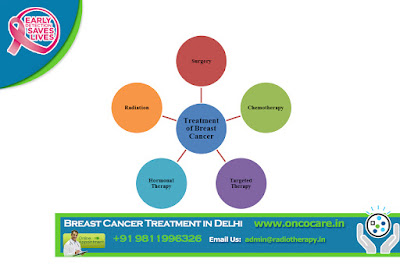
A woman’s most positive course of Breast Cancer treatment will be determined using a number of factors including the size/location of the breast tumor, the stage of the cancer, and laboratory results. Tests that measure Estrogen Receptor (ER) and Progesterone Receptor (PR) are important because the results could be prognostic. These tests can show the potential aggressiveness of the cancer and predict response to treatment. Obtaining a second opinion before beginning breast cancer treatment is recommended. Patients should learn about all treatment options available to them and are encouraged to discuss all possible alternatives with their physician or cancer treatment team. In most cases, women with breast cancer will undergo surgery as part of their cancer treatment. The most common types of breast surgery include: lumpectomy and mastectomy. In addition to a lumpectomy or a mastectomy, some patients will receive adjuvant (additional) treatment to stop cancer growth, spread, or recurrence. Types of adjuvant therapies include: chemotherapy, radiation therapy, and drug treatments. Some women may be treated with chemotherapy, radiation, or drugs without having breast surgery.

Screening Test For Breast Cancer  and treatment norms are continually changing. To help clarify your choices, here are 5 questions to ask your doctor:

What are all of my options for testing or treatment for my condition?
How exactly might the treatment help me?
How good is the evidence I’ll benefit from the treatment?
What side effects can I expect, and what bad outcomes might happen?
If it’s a test, what do you expect to learn from it, and how might it change my treatment? If it won’t, why do I need it?
* Recommended by the Lown Institute

Lumpectomy

Lumpectomy refers to the surgical removal of a tumor in the breast along with a small section of the surrounding normal breast tissue. This tissue is then tested for cancerous cells. Lymph nodes may also be removed for testing. If cancerous cells are discovered, additional surgery or treatment may be necessary. Women who undergo a lumpectomy normally receive radiation therapy for about six weeks following the procedure to kill any cancer cells that may have been missed with the removal of the tumor.

Mastectomy

Mastectomy is the surgical removal of the breast. Types of mastectomy include simple, modified radical, and radical. The removal of some or all of the lymph nodes may or may not occur during the mastectomy. In most case reconstruction is possible almost immediately after the surgery. Mastectomy is usually the treatment for women with Stage 0, Stage I, Stage II, or Stage III breast cancers. Surgeons sometimes perform radical mastectomy on Stage IV patients to provide symptom relief.

Auxiliary node dissection is the removal of some or all of the lymph nodes in the underarm. Auxiliary node dissections are usually done on women having a mastectomy to determine if the cancer has spread past the breast. Sentinel node biopsy is when only the sentinel lymph node is removed to estimate breast cancer metastasis (spread). Lymphedema (chronic swelling of the arm) is a potentially dangerous side effect of lymph node removal.

Sentinel lymph node biopsy followed by Breast Cancer Surgery

The sentinel lymph node is the first lymph node to receive lymphatic drainage from a tumor. It is usually the first place that breast cancer will spread to. To identify the sentinel node, an injection of radioactive material or blue dye is given near the tumor. The sentinel node will be the first lymph node to receive the substance or dye. It is then removed and analyzed.  If cancer cells are not found, the surgeon will proceed with the removal of the tumor.

Chemotherapy

Chemotherapy is an anticancer drug therapy and is normally given intravenously (through the vein) or orally in pill or liquid form. Chemotherapy may be used on its own or with a lumpectomy or mastectomy. Chemotherapy is a systemic form of treatment; it flows through the bloodstream, affecting the entire body. Its purpose is to obstruct the DNA synthesis of cancer cells. The appropriate combination of drugs used for chemotherapy is based on the patient's cancer type and individual medical profile.

Radiation

Radiation therapy uses high-energy rays to prevent breast cancer cells from growing and dividing. Ionizing radiation leaves energy in the area being treated. This process injures cancer cells by damaging genetic material and stops growth. Even though radiation damages both cancer cells and normal cells, the normal cells are usually able to repair themselves after radiation.

Drug Therapy

A variety of drugs may be used with or without breast surgery to treat breast cancer. The most common breast cancer drug is tamoxifen. It interfers with the estrogen receptors in breast cancer cells. By blocking estrogen in the breast, tamoxifen helps reduce the growth and reproduction of breast cancer cells.Other drugs may be used with or without breast surgery to treat breast cancer. They include:

Herceptin: used to treat breast cancer patients who are Human Epidermal growth factor Receptor 2-positive (HER2 )
Ellence: used in conjunction with chemotherapy (cyclophosphamide and fluorouracil) to treat early stage breast cancer
Taxol: used to treat early and advanced stages of breast cancer
Docetaxel: used in conjunction with chemotherapy to treat advanced breast cancer
Aromasin: used in post-menopausal breast cancer patients with advanced breast cancer
Arimidex: used in advanced (metastatic) breast cancer patients who have not responded well to tamoxifen


Tuesday, 11 April 2017

Breast Cancer Treatment in India

Breast Cancer Treatment in India

Breast Cancer Surgeon india

Routine care is the best way to keep you and your breasts healthy. Although detecting breast cancer at its earliest stages is the main goal of routine breast care, other benign conditions, such as fibrocystic breasts or cysts, are often discovered during routine care.
Breast cancer is the most common type of cancer among women in the United States, other than skin cancer.

According to the National Cancer Institute, when breast cancer is found early and is still localized (restricted to the site of origin, without evidence of spread), the relative survival rate, when measured at five years, is around 98 percent. When breast cancer is found at a late stage (cancer that has spread to distant parts of the body), the survival rate at five years is about 23 percent.

Although the incidence of breast cancer is beginning to decrease, one out of eight women will develop breast cancer at some point in her life. Mortality rates have decreased over the past several years because of early detection and improved treatment of Breast.

If you are diagnosed with Breast Cancer Treatment in India, the most important thing for you to remember is that it is not a hopeless condition. Early detection and modern therapy with a combination of Breast cancer Surgery in India, Radiation Treatment in India, drugs, or hormones can help many patients.

Friday, 3 March 2017

Best Radiologist in India

Best Radiologist in India

Best Radiotherapy in India

An Introduction to Radio Therapy


         Radiation Oncology syn: RadioTherapy, is a branch of medicine that utilizes Ionizing Radiation of various types & energies to treat cancer & some benign conditions.


Radiologist in india

         With rapid technological advancements, the precision and accuracy has evolved rapidly to make RadioTherapy indispensable in the multi-modality management of cancer 
best radiologist in india


         The propagation/transmission of energy from a Radiative Source to another medium is termed Radiation.
         Transmission of energy can be in the form of Electromagnetic waves or Particulate Radiation. 

oncology treatment

 radiologist in India


         Based on Energy, Radiation can be
         Ionizing (High Energy)
         Non-Ionizing (Low Energy)
1.  Radio waves
2.  Microwaves
3.  Infrared
4.  Visible Light
5.  Ultraviolet

 radiotherapy treatment india

Cellular effects of Radiation

         Ionizing Radiation injects energy into a material, like a microscopic bullet, until the radiation is stopped by the material due to absorption.
         On the cellular level, Radiation damages all molecules of the cell, but the ultimate target is the DNA, which will eventually kill the cell.

 radiologist in india


 radiotherapy treatment

best oncologist in india

 radiologist in india


         Repair (of Sublethal Damage)

·         Sublethal Radiation induced damage is repaired & helps Tumor cells (and normal tissue) recover.

         Repopulation
·         Both Tumor cells & Normal tissue cells proliferate & mitigate the effect of RT

         Reoxygenation
·         Hypoxic cells are resistant to radiation.
·         Since a major part of the tumor is hypoxic, reductions in size after a fraction of Radiotherapy reoxygenates previously hypoxic cells, making them radiosensitive.

         Reassortment
·         Dividing cells are sensitive to RT in specific phases of the cell cycle
·         As tumor cells are in different phases of the cell cycle, those in radiosensitive phase get killed first. Remaining cells continue the cycle and are killed at the next fraction of RT when they reach Radiosensitive phase. 


 Best Rdaiologist in india


         According to AIM

1.    Curative syn. Definitive RT: Application of RT ALONE to achieve cure. e.g. Early Head & Neck, Early Cervix
2.    Palliative RT: Application of RT to alleviate symptoms of Cancer. e.g. Bone metastases, Brain Metastases, Superior Vena Cava Obstruction
3.    Prophylactic: Application of RT to prevent relapse in relapse-prone areas. e.g. Prophylactic Cranial Irradiation in Leukemias

         According to TIMING & combination with other modalities

1.    Adjuvant RT: Application of RT after any kind of treatment modality. If given immediately after surgery, post-op RT
2.    Neo-Adjuvant RT: Application of RT before any kind of treatment modality. If given immediately before surgery, pre-op RT
3.    RadioChemotherapy syn. Concurrent ChemoRadiotherapy (CCRT): Application of RT concurrently with Chemotherapy. Can be Adjuvant or Neo-Adjuvant.

         According to MODE of delivery of Radiotherapy

         External Beam RadioTherapy: Given externally to the patient by a treatment machine e.g. Linear Accelerator
         Brachytherapy: Given by implanting Radioactive sources directly on patient (Interstitial) or in body cavities (Intracavitary).
         Intra-Operative RadioTherapy: Given directly to Tumor Bed at time of surgery.
         Stereotactic Radiotherapy/RadioSurgery: Given externally by utilizing a rigid frame to deliver high doses in few fractions, to critical sites (e.g. CNS tumors) using a special machine. e.g. Gammaknife

         According to PRECISION

         2 Dimensional (Traditional) Radiotherapy: Obsolete. Minimal sparing of normal tissue
         3 Dimensional Conformal Radiotherapy (3D-CRT): RT delivered by conforming Radiation dose around tumor. Spares some normal tissue
         Intensity Modulated Radiotherapy (IMRT): A Highly developed form of 3DCRT, in which the radiation dose is tightly conformed around tumor. Spares most normal tissue.
         Image Guided Radiotherapy (IGRT): IMRT delivered in conjunction with a daily CT scan of patient done by the treatment machine. Used to account for changes in size of tumor and accurately adjust for variations in normal tissues.  


         Spatial Co-operation - 'The Steel Paradigm'
         Scenario where full strength CT & RT act independently, with Non-overlapping Toxicity Profiles
         Ideally, RT (Local Control) + CT (Systemic Control) = Improved outcomes
         Few CT agents meet this criteria due to - Limited Single agent activity + Toxicity driven dose reductions


 http://oncocare.in/workshop.html


         In Field Co-operation

         Scenario where CT & RT act together to increase Tumor cell kill.
         Full Dose RT (Local Control) + Reduced Dose CT (Enhances RT effect + Cytotoxic Effect) = Improved outcomes
         Strictly, Radiosensitizer - Enhances RT effect ONLY (e.g. Misonidazole)
         Low Dose CT - Radiosensitizer + Cytotoxic effect
         If Antagonistic action, then Radioprotective

radiologist in india


         Brain Tumors - Maximal safe resection followed by Adjuvant RT
         Recommended for all WHO Grade II/III/IV tumors.
         Head & Neck - Organ Preservation Approach
         Nasal Cavity + ParaNasal Sinus: Adjuvant RT for close/positive margins, PeriNeural Invasion (PNS - Adenoid Cystic Histology). Adjuvant CCRT for Lymph Node +ve
         Oral Cavity Cancers - Adjuvant RT for Close Margins, Stage III/IV, Lymphovascular/ PeriNeural Invasion +ve, Oral Cavity Ca with Level IV/V Lymph Node +ve. Adjuvant CCRT for Margins +ve, Extracapsular spread +ve.
         Oropharynx, Larynx, Hypopharynx - Upfront surgery not preferred. If performed, Indications remain the same as for Oral Cavity Ca. Additional Indications for Adjuvant RT - pN2-N3, Cartilage Invasion (+ Greater than 1 cm subglottic invasion - Larynx only)
         Salivary Glands - Adjuvant RT for Close/ positive margins, Intermediate-High Grade, Adenoid Cystic Histology, LVI/ PNI, T3-T4, LN +ve
         Medullary Carcinoma Thyroid: Adjuvant RT for Positive margins, Extensive LN +ve, T4a.
         Lung Cancer - All patients should receive Adjuvant treatment
         NSCLC - Resectable stage I/II: Adjuvant RT for Close (<5 mm)/ Positive Margins. 

         GI Cancers
1.    Esophagus: Resectable Node -ve (Non-Cervical). Unfavorable T2N0, T3/T4, N+ve or Close/Positive margins - Adjuvant CCRT (RT + Cisplatin/5-FU)
2.    Stomach: Resectable Node +/ -ve. Adjuvant CCRT (Mc Donald's - RT + Leucovorin/5-FU).
3.    Pancreas: Resectable. Adjuvant treatment controversial. Adjuvant Chemo (Gemcitabine) followed by CCRT (RT + 5-FU) - suggested
4.    GB: Resectable T1b or advanced. Adjuvant CCRT (RT + 5-FU)
5.    Biliary Tract (Intra/ Extra - hepatic): Resectable with Residual disease. Adjuvant CCRT (RT + 5-FU - Stereotactic RT preferred)
6.    Colo-Rectal: Resectable Stage I - Adjuvant CCRT for T2(RT + 5-FU). Stage II/III - Chemo(5-FU) followed by CCRT(RT + 5-FU) followed by Chemo(5-FU) vs NeoAdjuvant CCRT (RT + 5-FU) followed by surgery followed by Chemo (5-FU) 
7.    Anal: Resectable T1-T2, Node -, Close or positive margins. Adjuvant CCRT (RT + 5-FU/ Mitomycin)

         Breast - RT is an integral part of Breast Conserving Treatment (BCT). Even patients undergoing Mastectomy need Post Mastectomy RT (PMRT).
         In situ disease: BCT for DCIS
         Early Stage (I-IIB +/- T3N0): BCT vs Total Mastectomy + PMRT for T3/T4, positive margins, extracapsular spread and 4 or more Axillary nodes.
·         For T1-T2, 1-3 Axillary nodes: Consider PMRT for 20% or more positive nodes, size, margins, LVI, Age, Grade
·         For T1-T2, N0: Consider PMRT for Close/positive margin, Age, LVI, Grade
         Locally advanced: Chemo followed by Surgery. Mastectomy or BCT

         Genitourinary Cancers

         Bladder - Non Muscle Invasive: Adjuvant RT for Abnormal Cytology, Multifocal Disease, High Grade histology, Subtotal Resection
         Prostate - Adjuvant RT for Margins +, Residual disease on Imaging/Biopsy or pT3 disease
         Urethral - NeoAdjuvant RT for Distal Lesions or Lesions involving the entire urethra
         Testicular - Seminoma (Limited to Testis): Adjuvant RT
         Penis - Organ Preservation Approach - Increasingly favored based on Anal & Vulvar Ca results. Adjuvant RT for Node +

The indications for Definitive Radiotherapy/CCRT are numerous and continue to increase with ongoing Research.
Palliative Radiotherapy is an effective method of controlling some of the most distressing symptoms due to metastatic disease (irrespective of Primary).

Call us for More Details: +91 9811996326


Visit: oncocare.in